
How to Keep Cats and Dogs Cool at Home in Hot, Humid Weather

Updated: 4 days ago

To keep cats and dogs cool at home in hot, humid weather, give them shade, moving air, cool floors to lie on and fresh water in more than one place. Keep walks and play to the cooler ends of the day, and never leave a pet in a parked car.
Just as important: learn the signs of heat stress. Heavy panting, drooling, restlessness or unsteadiness in the heat means it's time to cool your pet down and call your vet straight away.
Key Takeaways
Dogs cool down mostly by panting, and humid air makes each pant cool less. Cats cool down by grooming and by lying on cool surfaces.
Give every pet a cool, shaded room with airflow, a cool floor and fresh water, all day.
Put water in more than one place, and refresh it daily. Hot days raise how much pets need.
Walk dogs early and late, and keep paws off hot pavement.
Flat-faced breeds, heavier dogs and older pets are at higher risk in the heat.
Never leave a pet in a parked car, even in the shade with the windows open.
Heavy panting, drooling, restlessness or unsteadiness in the heat is an emergency. Cool your pet and call your vet.
How do cats and dogs cool themselves down?
Not the way we do. People sweat across the skin, but dogs and cats sweat only a little, mostly through their paw pads.
Dogs cool down mostly by panting, which evaporates water from the mouth and airways. Humid air slows evaporation, so in tropical weather each pant cools less and dogs pant longer.
Cats cool down by grooming, as saliva evaporates from their fur, and by stretching out on cool surfaces such as tiles. Rapid breathing in a cat in the heat is a warning sign, not a normal way to cool off.
That's why a hot, humid day is hard on both. The air itself makes their cooling less effective.
In a humid climate, a dog's panting and a cat's grooming both cool less, so the home has to do more of the work: shade, airflow, cool floors and water all day.
How hot is too hot for cats and dogs at home?
There's no single number for every pet, but tropical homes run warm all year. Singapore's long-term average daily temperature is about 27.5°C, with daily highs averaging about 31.5°C and high humidity in every month.
Watch the room, not just the weather. Sun-facing windows, closed rooms with no airflow and the hottest stretch of the afternoon add up fast. If a room feels stuffy to you, it's harder on a pet in a fur coat.
How can you keep your home cool for pets?
Create at least one cool zone your pet can always reach.
Shade the room. Close curtains or blinds on sun-facing windows during the hottest part of the day.
Keep air moving. A fan helps, and a damp towel draped in the fan's path, not on it, adds a little cool moisture.
Offer cool floors. Tiled kitchens and bathrooms are favorite summer spots, so keep doors open. A cooling mat helps too.
Don't shut pets in. Never close a pet in a room without airflow or with the air-conditioning switched off on a hot day.
Brush more often. Regular brushing removes loose undercoat that traps heat.
Ask your vet before trimming or clipping your pet's coat. The right answer depends on the breed, and shaving isn't always the cooler choice.
How much water do pets need on hot days?
More than usual, and always available. Veterinary groups advise giving pets unlimited access to fresh water and shade in warm weather.
As a guide, a healthy adult dog needs roughly 50 to 60 mL of water per kg a day at rest, and hot weather can push that up by about half again. Cats need roughly 55 to 70 mL per kg a day from all sources, food included.
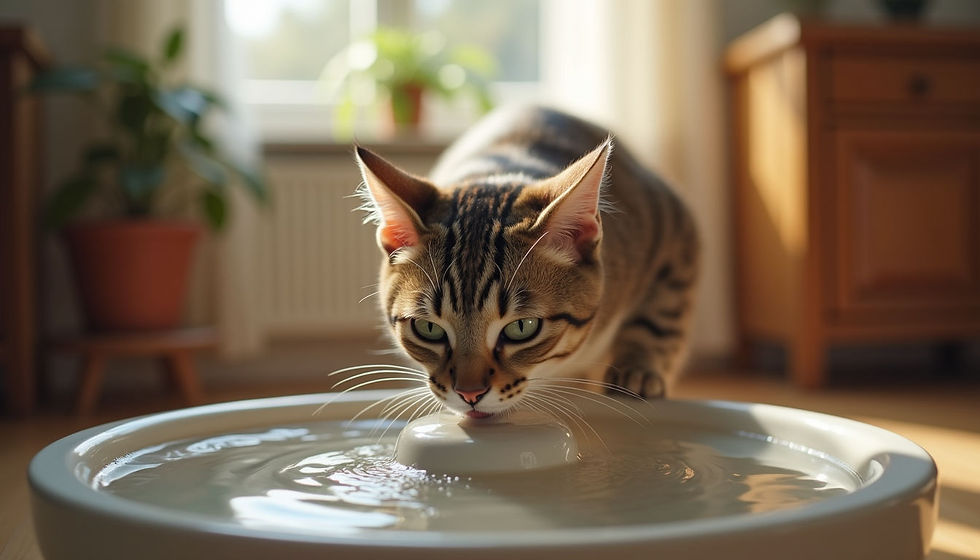
Use more than one water station. One where your pet rests, one near the door.
Refresh, don't just top up. Water left out in a warm room goes stale and builds up bacteria.
Add moisture with food. Wet food is around 70% water, but on hot days it needs extra care. How to Keep Wet Pet Food Fresh in Hot Weather covers the time limits.
Offer cool snacks. Ice cubes on a hard floor or a frozen lick mat can help keep pets cool and entertained.
For setup details, see Big Dogs, Hot Days and How to Choose a Pet Water Fountain for Hot, Humid Homes.
When is it safe to walk a dog in hot weather?
Early morning and evening, when the air and the ground are cooler. Avoid hot surfaces such as asphalt, which can burn paws. For more everyday dog-walking tips, see Walk the Walk: The Guide to Successful Dog Walks.
Test the ground. If the pavement is too hot for the back of your hand after a few seconds, it's too hot for paws.
Shorten the route. On hot days, a shorter, shadier walk is better than the usual loop.
Carry water. Bring a collapsible bowl and offer water along the way.
Ease off the play. Save fetch and running for cooler hours, and rest in the shade often.
Overweight pets and flat-faced breeds have a higher risk of problems with warm-weather exercise, so be extra careful with them.
Which pets are most at risk in the heat?
Some dogs face a much higher risk. In a Royal Veterinary College analysis of veterinary records from more than 900,000 dogs in the UK, published in Scientific Reports, Chow Chows had about 17 times and Bulldogs about 14 times the risk of heatstroke compared with Labrador Retrievers. French Bulldogs had about 6 times the risk, and Pugs about 3 times.
Flat-faced (brachycephalic) breeds: shorter airways make panting less effective.
Heavier dogs: dogs heavier than their breed average had almost 1.5 times the risk.
Older dogs: dogs over two years old were at higher risk than younger ones.
In the same analysis, about one in seven dogs with heatstroke died. Avoiding it is far easier than recovering from it.
In a large UK analysis of veterinary records, about one in seven dogs seen by a vet for heatstroke died, and flat-faced breeds such as Bulldogs faced many times the risk of other dogs.
What are the signs of heat stress in cats and dogs?
Watch for these signs on hot days, and act straight away if you see them:
Heavy or rapid panting or breathing that doesn't settle
Excessive drooling
Restlessness or anxiety
Unsteadiness or weakness
Unusual gum or tongue color
Vomiting
Collapse
What should you do if your pet overheats?
Act fast and call your vet. Heat stress is an emergency.
Move your pet to a cool, shaded place with airflow.
Cool them gently with a cool, damp towel or cool (not ice-cold) water.
Offer water, but don't force your pet to drink.
Call your vet right away, even if your pet seems to recover.
Never leave a pet in a parked car
Cars heat up quickly to dangerous temperatures, even when the day isn't extreme. Shade and an open window don't make it safe. If you can't take your pet inside with you, leave them at home.
A hot-day checklist
Cool zone: Is there a shaded room with airflow and a cool floor?
Water: Is there fresh water in more than one place?
Food: Is wet food cleared within about an hour?
Walks: Are walks early or late, on cool ground?
Risk: Is your pet flat-faced, heavier or older? Take extra care.
Signs: Does everyone at home know the signs of heat stress?
How APAWLOGY® devices help on hot days
Our devices support the three daily conditions that matter most in the heat: water, meals and temperature. They help with everyday care; they're not a substitute for shade, airflow or your vet.
AQUA Spring is a wireless fountain, so you can put water in the coolest room, away from food and litter. The SmartLife app records each drink, so a change on a hot day is easier to spot.
AQUA Titan holds 11 L across two tanks, sized for large dogs and multi-pet homes, so one morning fill covers a long, hot day.
SAVOR Cool keeps wet food cool from below with an ice pack and covered between bites, for slow eaters on warm afternoons.
For the bigger picture, see The Three Daily Conditions Every Guardian Controls.
Frequently asked questions
How can I keep my cat cool without air-conditioning?
Close curtains on sun-facing windows, run a fan with a damp towel in its path, and give your cat access to tiled floors. Brush often, offer fresh water in more than one place, and never shut your cat in a stuffy room.
How can I keep my dog cool at home?
Give your dog a shaded room with airflow, a cool floor or cooling mat, and fresh water in more than one place. Walk early and late, keep play gentle in the heat, and ask your vet before trimming the coat.
Is it normal for a cat to pant in hot weather?
No. Cats usually cool down by grooming and lying on cool surfaces. Rapid breathing or panting in a cat in the heat can be a sign of heat stress, so cool your cat and call your vet.
Should I shave my dog in hot weather?
Ask your vet first, because the right answer depends on the breed. Regular brushing to remove loose undercoat is a good step for most pets.
What time is safe to walk a dog in hot weather?
Early morning and evening, when the air and pavement are cooler. If the ground is too hot for the back of your hand after a few seconds, it's too hot for paws.
What are the signs of heatstroke in dogs and cats?
Heavy or rapid panting, excessive drooling, restlessness, unsteadiness, unusual gum or tongue color, vomiting or collapse. Move your pet somewhere cool, cool them gently and call your vet right away.
Sources
AVMA. Warm weather pet safety.
Royal Veterinary College, VetCompass. Flat-faced dogs such as bulldogs, French bulldogs and pugs at increased risk of heat stroke. Scientific Reports, 2020.
Bath Cats & Dogs Home. Keeping cats cool in hot weather.
World Bank. Climate Change Knowledge Portal: Singapore.
This guide is for general education and doesn't replace advice from your veterinarian. Every pet is different. If you're worried about your pet in the heat, call your vet straight away.


Comments