
Rolling Out The Welcome Mat - Preparing Your Pets For House Visits

Updated: Mar 21

(Source: Homes and Gardens)
Have you ever gotten a dog that randomly barks at you when you walk past a neighbor's door? Stranger danger.
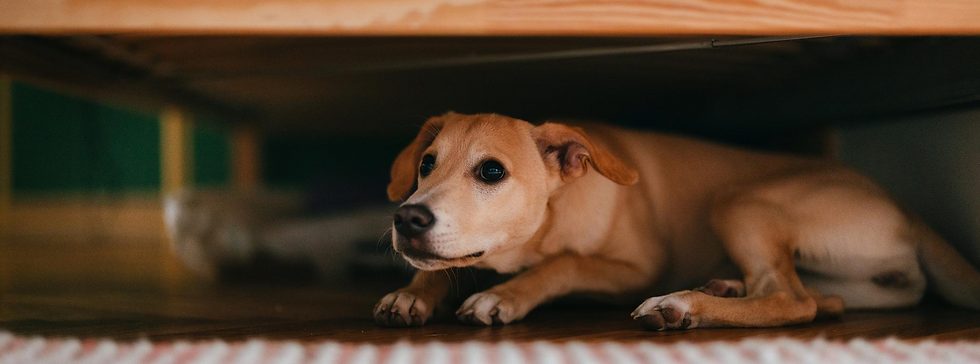
Pets by nature, are very weary of strangers, whether its in or near the house. If afraid of strangers, dogs will sometimes be aggressive and bark, some will hide and cower. Cats will stay on high alert from a distance, trying not to get too close and comfortable just yet. It's not always the case where your pet will be weary of strangers, sometimes more social pets will be willing to go up and close to smell and socialise with your guest.
Now why do pets react this way? Let us explore.
Why Strangers Feel Like a Threat
(Source: ManyPets)
Pets experience their home as their territory. For cats especially, a lot of their reactions stem from instincts. A cat's home is divided into a core area where it feels safe enough to sleep, eat, and relax, and a wider zone it actively defends. When a stranger walks in, that core area has been breached by someone whose intentions are completely unknown to them.
Dogs have a different relationship with their home space, but the territorial instinct is still there. Barking at strangers is something dogs were literally bred to do, and it happens when the anxiety doesn't settle even after the guest has been welcomed in.
Both dogs and cats can carry stress from a guest visit well beyond the visit itself. A dog may bark continuously, have an accident indoors, or pace. A cat may hide for the entire duration, stop eating, or groom excessively.
In more serious cases, pets can develop stress colitis, a physical condition where anxiety triggers digestive upset, sometimes lasting several days after guests have left, which may especially affect shy animals.
This is not an overreaction from your pet. It is their body responding to a real psychological stressor.
Preparations

(Source: PetDog Grooming)
Before anyone arrives, give your pet a designated safe space. A quiet room, a crate they love, or even a corner with their bed and a familiar blanket gives them somewhere to decompress. Cats in particular benefit from having a place they know is theirs and that guests cannot access.
Playing calm music or white noise in that room helps. So does placing a recently worn piece of your clothing nearby, as your scent is one of the most reassuring things your pet knows.
When guests arrive, your own energy matters more than you might expect. Dogs take behavioral cues directly from their owners. If you greet a guest calmly, with a relaxed voice and body language, your dog reads that signal and starts to calibrate accordingly. Rushing to the door in a panicked state does the opposite.
For dogs, having the guest enter the home first before you and your dog come in can reduce territorial tension. When the guest is already settled in the space, the dynamic shifts slightly in the dog's favour.
Coach your guests before they interact with your pet. For dogs wary of strangers, ask guests to avoid direct eye contact initially, skip reaching toward the dog, and let the dog approach on its own terms. Tossing treats gently on the floor near the dog is far more effective than attempting to pet them immediately. The dog begins to associate the stranger's presence with something good rather than something threatening.
For cats, the same principle applies. Ask guests to sit quietly, avoid staring directly at the cat, and simply let the cat decide if and when it wants to come closer. Forcing a cat out of hiding does more harm than good and can make them more withdrawn long-term.
If your guest is staying overnight or longer, routine becomes your best tool. Cats in particular find comfort in predictability. Feeding, play, and quiet time at consistent hours helps them feel regulated throughout.
When to Worry

(Source: Vet-O)
Most pets will settle once the guest is gone and the household returns to normal. If your pet is refusing food or water, has not come out of hiding after an extended period of time, or is showing signs of physical distress like vomiting or excessive lethargy, it is worth a call to your vet. Occasionally, stress from disruption can mask or trigger an underlying health issue that needs attention.
It is also worth noting that some cats simply remain cautious of strangers for their entire lives. Respecting that boundary, rather than working against it, is what keeps your relationship with them intact.
Building up the trust factor

(Source: NationalCityCorporation)
Your pet trusts you to read the room for them. Preparing thoughtfully before guests arrive, coaching visitors on how to behave, and giving your pet a genuine escape route are all quiet acts of care that compound over time. The more your pet learns that a guest's arrival does not mean their safety is compromised, the more their confidence builds.
Some will warm up within an hour. Some will take months. And some will always prefer to watch from a safe distance, which is entirely valid.
Upcoming Eid Festivities
With the upcoming eid festivities on the horizon, these nuggets of advice would be great for our muslim pet owners who own cats.
Having the whole family over might end up scaring your cat, so knowing what to do an prepare beforehand does wonders for you, your pet and your guests.
References and helpful links



Comments