
Earth and Pets Day 2026 - Bridge Between Earth and Pet

(Source: SG Pet Events)
If you own a pet in Singapore, there has never been a better time to think about what that means for the world around you.
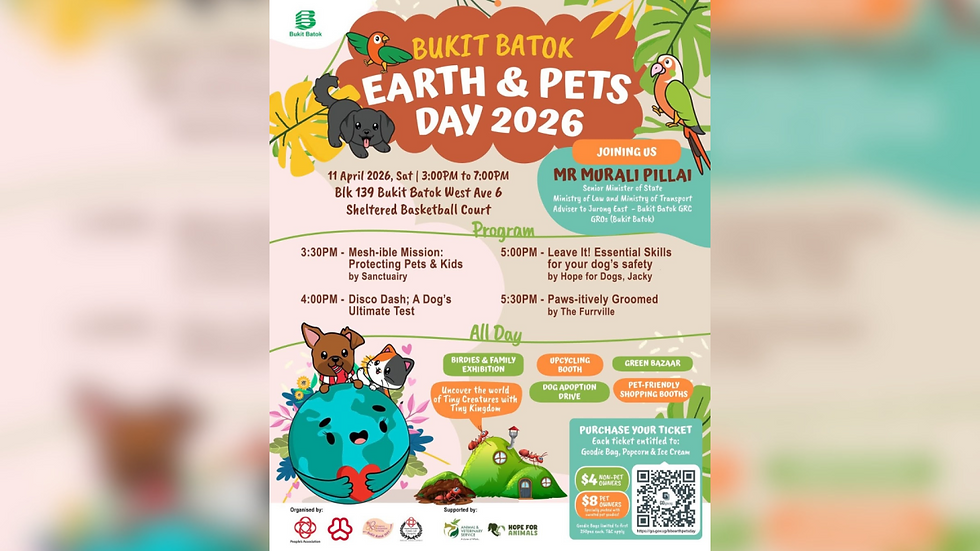
Bukit Batok's Earth & Pets Day 2026, organised through OnePA, is a local event that signals a call to action for environmental protection. The event is part of a broader wave of pet-focused activities in Singapore this year, following PetExpo 2026, which ran from 3 to 5 April at Singapore Expo, alongside the Pets & Plants Extravaganza held in January at Suntec Convention Centre. Together, these events reflect just how much the Singapore's pet scene here has grown.

Singapore's pet population has expanded considerably over the past few years. The dog population reached approximately 114,000 and the cat population around 94,000 in 2023, both up meaningfully from 2019. Post-COVID, pet ownership rose by roughly 25% between 2020 and 2023, with singles, young couples, and elderly residents all contributing to that growth. One in seven households in Singapore now has a pet.
That scale starts to matter when thinking about its environmental impact. Pets, particularly dogs and cats, have what researchers sometimes call a "carbon pawprint". For instance, pet food production in the United States alone accounts for a significant share of global meat production, with all the land use and emissions that come with it. Singapore is no different in principle, even if the numbers are smaller.
The good news is that Earth & Pets Day speaks directly to this intersection. Events like it encourage pet owners to think about their choices beyond just what their animals eat or wear. What about the practical outcomes of this event?
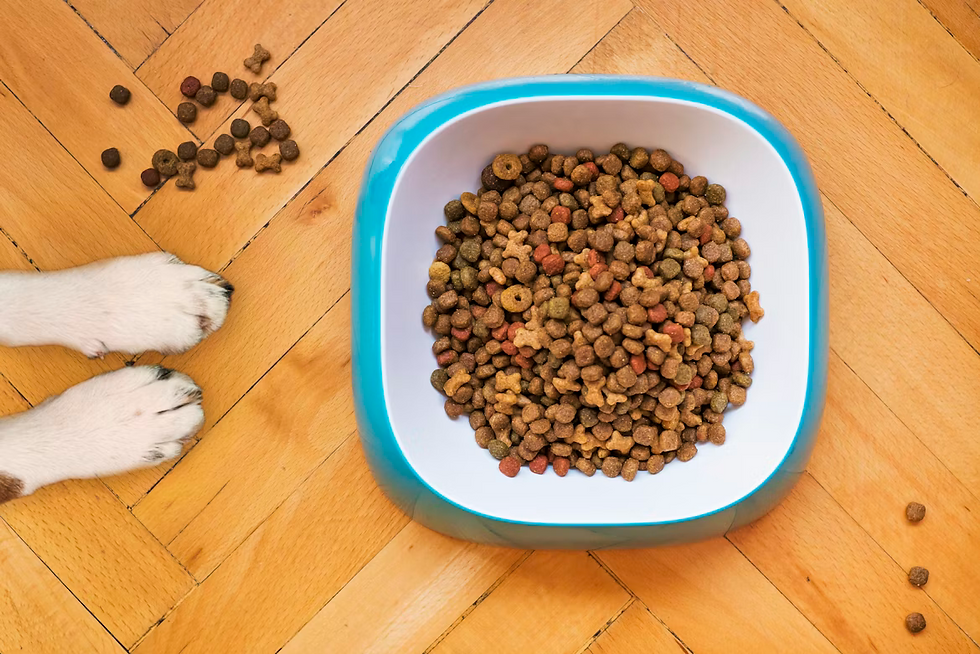
Food choices - Pet food is where most of a pet's environmental footprint comes from. Choosing brands that use sustainably sourced proteins, locally produced ingredients, or novel proteins like insect-based formulas can reduce that impact. A growing number of Singapore-based pet food producers are moving in this direction. Always check with your vet before changing your pet's diet.
Waste disposal - Under the Environmental Public Health Act, failing to clean up after your dog in public spaces is a fineable offence in Singapore, with penalties of up to $1,000. Beyond legality, how you dispose of that waste has environmental consequences. Standard plastic bags take hundreds of years to break down. Switching to cornstarch-based or certified compostable poop bags is a small change with a measurable difference over time.
Cat litter has a greener alternative - Clay-based and silica gel litters are not biodegradable. Options made from recycled paper, wood pellets, corn, or walnut shells break down more readily and do not leave behind microplastics. Some are even home-compostable, depending on the brand.

Toys and accessories - Most pet toys are made from plastic and have a short lifespan. Hemp leashes, bamboo pet beds, and toys made from natural rubber or recycled materials are increasingly available in Singapore. Durable toys also reduce how often you need to replace them, which is both cheaper and less wasteful.
Adoption over purchase reduces demand for intensive breeding - Animal shelters in Singapore saw an increase in adoptions post covid. Even events like PetExpo 2026 included adoption drives for dogs, cats, and rabbits, giving would-be owners a direct path to giving an animal a home rather than adding to breeding demand.

Earth & Pets Day 2026 in Bukit Batok is a reminder that caring for your pet and caring for the environment are not competing priorities. They are part of the same responsibility.
Many of us gather together to celebrate, and push greener alternatives for your pet's lifestyle choices.
The choices made by Singapore's growing community of pet owners, multiplied across hundreds of thousands of households, can make a difference.
References and Helpful Links

Comments