
Pushing The Limits - Breakthroughs in Pet Technology

Updated: Mar 21
(Source: Lickicious)
It was not long ago when we used archaic pet equipment. In the early 2010s times were simpler, with simple food and water bowls, plush and squeaky toys, and sometimes a pet bed or playing area. There has been a massive tech shift however, with rapidly advancing technologies on the rise during the last decade, the archaic equipment we know and love has now evolved into something more digital.
Today, the global pet tech market sits at roughly $15.6 billion and is predicted to surpass $52 billion by 2035. This growth mirrors something that has been shifting in how people relate to their animals. The ever growing pet tech market stays robust, and continues to serve pet owners for generations to come. But for us to appreciate its brilliance, we must first understand its roots.
It Started with Tracking

(Source: Powunity)
The earliest wave of mainstream pet tech was about location. Microchipping gave shelters and vets a way to identify lost animals. RFID chips, required no battery and could store an owner's contact information for the life of the animal. Governments and animal welfare organisations in many countries began mandating microchipping, and it became the baseline expectation for responsible ownership.
GPS collars came next, taking passive identification and turning it into active monitoring. In mid 2024, we've seen launches of a new advanced GPS smart collar, which offered real-time location tracking, geofencing, and route history. A dog that slips through a gate can be located within minutes. For cat owners, some collars even map roaming patterns over weeks, revealing just how far a house cat actually travels.
Health Monitoring
(Source: Heineke Veterinary Hospital)
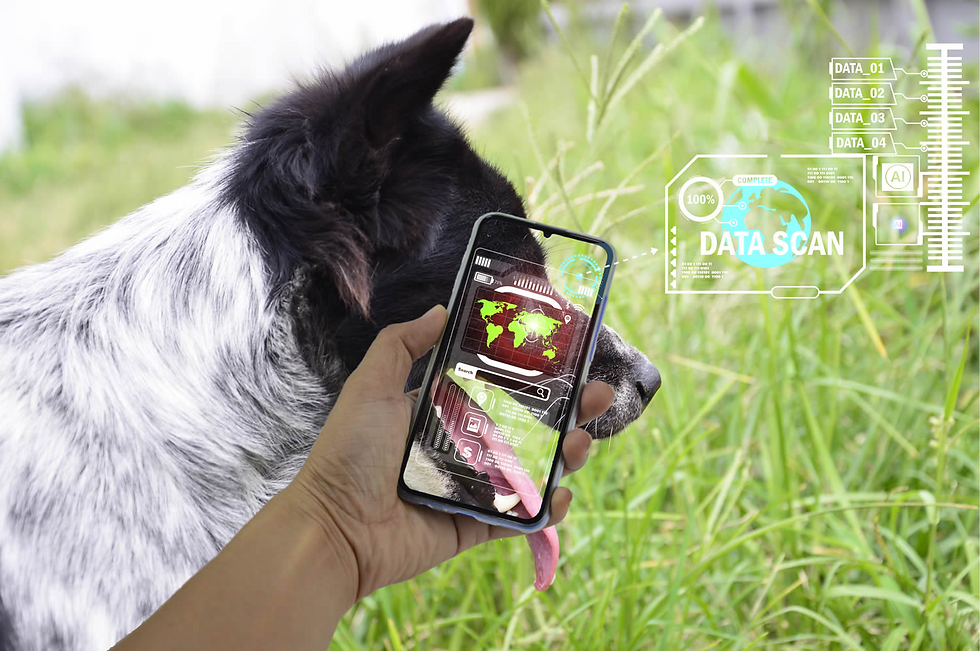
The next shift was health, borrowing the wearable technology for humans that proved continuous data collection could surface problems before they became emergencies.
Smart collars now track resting heart rate, respiratory rate, sleep quality, activity levels, and temperature. This gradually led to the development of AI capable of identifying subtle changes in movement that can signal early joint issues, and some others use machine learning to flag anomalies in a dog's daily patterns, sending owners an alert before something becomes a vet visit.
There was even the invention of a non-invasive pad that tracks vitals through pressure and vibration sensors while an animal rests. The mat connects to an app and generates health summaries for owners to share directly with their veterinarian.
Telehealth services have grown in parallel. Vet appointment scheduling apps, digital health records, and video consultations are now standard offerings from many clinics and pet health platforms.
Feeding and Hydration Revolution
Automated feeders have been around for decade, stagnating when it came to improvements, but the category has undergone a genuine transformation. Early models were mechanical timers, modern smart feeders connect to apps, allow portion control down to the gram, send feeding confirmations to a phone, and in some cases include built-in cameras.
The more advanced end of the category is pushing into nutritional personalisation. Devices are beginning to factor in a pet's age, breed, weight, and activity data before dispensing a meal. Integration with health tracking wearables means that pets can have varying adjustments to their portion, mirroring the kind of adaptive nutrition advice a dietitian might give a human athlete.
Smart pet doors have taken a similar path. It incorporate machine learning and facial recognition to identify which pet is requesting entry, keeping strays or wildlife from wandering in while letting the household pets pass freely.
Cameras and Behaviour Analysis

(Source: Reddit)
Remote monitoring cameras were initially simple two-way audio and video devices, letting owners check in and speak to a pet during the workday or busy periods. They have evolved significantly over the last decade. Present day monitoring systems use AI to analyse a pet's body language, detecting stress signals, unusual stillness, or repetitive behaviours that might indicate anxiety.
Some monitoring systems tie camera footage to activity data from a wearable, building a composite picture of a pet's day. An owner returning from work can review a dashboard that summarises sleep duration, activity peaks, feeding times, and any behavioural flags rather than watching hours of footage.
Facial recognition has also made its way into animal welfare. Petco Love Lost built a searchable national database that uses image recognition to help reunite lost pets with their owners. A person who finds a stray cat can upload a photo and search for matches within a national network of reported missing animals.
Hygiene and Welfare Changes
Self-cleaning litter boxes, app-controlled dog doors, aquarium filtration systems that regulate water chemistry automatically, and grooming tools with adjustable vibration settings are all part of the growing category of smart home integration for pet owners. Companies in China developed intelligent pet cabins that combine air purification, smart feeding, temperature regulation, and real-time health monitoring into a single enclosed habitat unit.
The Future of Pet Tech

(Source: Metatech Insights)
DNA testing is beginning to intersect with personalised healthcare. Companies are exploring how breed-specific genetic risk profiles can inform preventive care protocols, alerting owners to conditions their pets may be predisposed to years before a symptom appears. Scientific developments resulted in products specifically aimed at extending pet lifespans through scientifically validated interventions, from orthodontic tools to targeted dental care products.
Similarly, advancements paved the way for developing cultivated meat for pets using cell-culture technology, an innovation that removes traditional meat production from the equation entirely and could reshape how pet nutrition is sourced at scale.
The thread running through all of it is the same. As technology and science rapidly develops and expands, the future is bright for improving the quality of welfare for our beloved partners. Somewhere down the line, they might live lives healthy enough to stick by our sides for longer.
References and Helpful links



Comments