
Pet Cafe's and Shared Spaces - Pets' Gradual Integration Into Society

Updated: Mar 21

(Source: SmartPaw)
Pet cafe's are a strange novelty. For non pet owners, they are able to socialize with cute animals, and for those with pets, its a perfect place for your own fur friend to get their fair share of socialization. All of this comes along with a side of coffee or tea. That is the pet cafe experience has been winning people over for decades.
But what exactly is the formula that make these places work? Let us start with the history of pet cafes, to understand.
History of modern pet cafes
The first modern cat cafe is widely credited to a venue called "Cat Flower Garden" in Taipei, Taiwan, which opened in 1998. A Japanese visitor was so taken with the concept that they brought it back to Osaka in 2004, and from there the idea spread across Asia and eventually worldwide.
The appeal makes a lot of sense, especially in dense urban cities. Compounding external factors on top of the sheer cost of pet ownership mean a lot of people who genuinely love animals simply cannot have one at home. Pet cafes fill that gap. You pay a cover charge or a per-drink fee, spend time with animals in a supervised setting, and go home happy and sated.
Today, the format has expanded well beyond cats and dogs. Depending on where you are in the world, you might find hedgehog cafes in Japan, rabbit cafes in Seoul, and capybara cafes drawing crowds across East Asia. Each comes with its own set of considerations.
What happens in a pet cafe?

(Source: The Straits Times)
Most pet cafes operate with a cafe section and a separate animal lounge area. Some run on timed sessions, usually between 60 to 90 minutes, so that the animals are not overwhelmed by a constant rotation of strangers. Others operate on a first-come, first-served basis with no strict time cap.
Before you enter the animal area, staff will almost always walk you through the rules, with the most common being sanitising your hands. Some venues require shoe covers or ask you to remove footwear entirely to maintain cleanliness. In some cases, you would be asked to sign a waiver.
Flash photography is typically prohibited because it startles the animals. Loud noises, chasing, and picking up animals without invitation are usually on the no-go list as well. These rules are in place to ensure that the animals are kept happy and comfortable.
These are typically the set rules for a more controlled and sheltered environment. You are also able to bring your pet along to socialise with the animals within the pet cafe, albeit they also come with a set of restrictions and rules to follow.
Animal Welfare and Pet Cafes

(Source: Hepper)
Not all pet cafes are created equal. Cat and dog cafes, when run responsibly, can provide animals with social enrichment, stable housing, and a path to adoption. Many partner with shelters and have successfully placed animals into permanent homes. The animals have space, routine, and staff who are caring about them.
With social enrichment, comes the question of socialization with unfamiliar animals. Usually, pet cafes would allow you to bring your own pet to socialize with the ones at the cafe. However, it is the owner's responsibility to keep their own pets in check as much as it is the responsibility of the pet cafe workers to keep theirs. Before bringing your own pet over, make sure to properly train them beforehand, so as to not cause any unnecessary trouble.
Pet cafes are but one of the more accepting places for pet owners to bring along their pets. Outside of pet cafe's however, it gets a little tricky. Most establishments and restaurants generally disallow pets to be brought along, even in outdoor seating areas, but there has however, been efforts made to alter that. Coming into the Singapore context, how have our rules adapted to this global shift in more pet-friendly establishments?
Singapore's specific rules on pet friendly establishments
(Source: Discoverist)
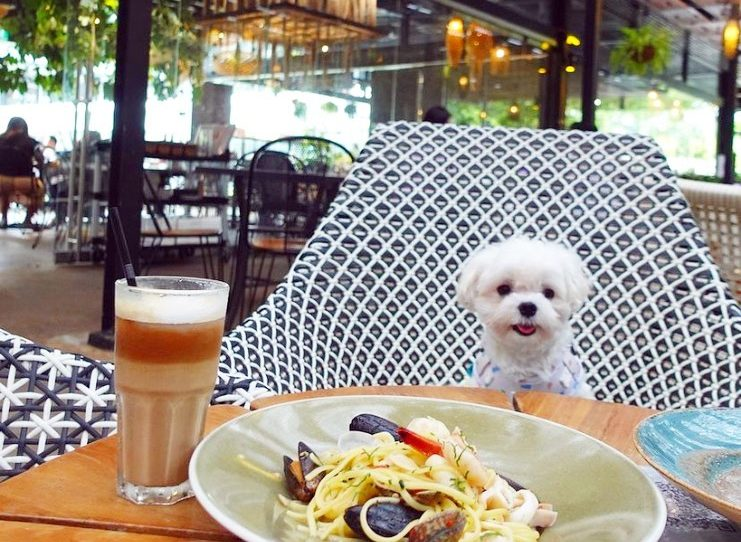
As of 1 January 2025, the Singapore Food Agency (SFA) announced that food businesses with Outdoor Refreshment Areas (ORAs) no longer need a special pet cafe licence to allow you to bring your pet along for a meal, as long as they are not also serving pet food.
Previously, any establishment that wanted to welcome pets had to convert their entire food licence to a dedicated pet cafe licence, which was a significant administrative and financial barrier. Now, any restaurant that simply wants pet-friendly outdoor tables no longer needs to go through that process.
That being said, some important boundaries remain. Pets are still not permitted inside enclosed dining areas or at hawker centres. Establishments that want to serve pet food alongside human food will still require a pet cafe licence, and halal-certified premises continue to prohibit pet dogs, including in outdoor areas.
It is also worth noting that each venue sets its own policies, so confirming directly before you arrive is always imperative.
Basic Pet Etiquette

(Source: Vanillapup)
Even the best-behaved dog can have an off day when confronted with new smells, unfamiliar dogs, and meeting with strangers. A few practical habits make the outing work for everyone.
The most crucial is to keep your dog on a leash. This is standard at virtually every pet-friendly establishment, and for good reason, as a leash gives you control before anything escalates. This is especially needed for dogs who tend to get overstimulated easily or are easily irritable
You may bring your dog's own water bowl and a mat they recognize from home, as familiar objects help calm animals in new environments. Basic commands like "hold" and "sit" are worth training before taking them outside. This ensures that your dogs behaves correctly when outside, so as to not bother other patrons.
Takeaway
As we move onto a more socially complex world, people around us are gradually being more accepting of bring pets into shared spaces. Pet cafe's are but one of the common places in which they are more accepting of pet owners bringing in their own pets. However, when we look at the regular shared spaces that us humans occupy, we still have a long way to go.
Singapore in itself has taken steps to allowing pets to enter more shared spaces, while setting clear restrictions. But will we ever reach a point where pets would be allowed in everywhere? Only time will tell.
References and helpful links



Comments