
A Meal Best Shared With Company - Human Food and Pets

Updated: Mar 21

(Source: Diamond Pet Foods)
Pets usually always eat kibble, but that's not always the case. Pets are able to consume the same food as us, albeit with some restrictions. Whether it's a rewarding snack or part of a meal diet, there are specific know-hows when it comes to understanding what your pets can or cannot eat.
To follow up from last blog post, we've discussed about pet-friendly establishments, and in some cases, these places will offer food for your pets to eat.
It is pivotal that pet owners understand what pets can and cannot eat. Dogs and cats have different digestive systems and very different nutritional needs. Dogs are omnivores and can tolerate a wider range of foods, while cats are obligate carnivores, meaning they rely almost entirely on animal protein to function. A food that is perfectly fine for your dog may have little to no value for your cat, or in some cases, be outright harmful. So lets delve into those distinct differences.
The Proteins

(Source: PetPost)
Cooked lean meats are the safest category of human food you can offer either a dog or a cat. Plain cooked chicken, turkey, and beef are all well tolerated and provide real protein value. It should be plain, with no seasoning, no garlic, no onions, no sauces. These meats are often used by vets themselves when a pet has an upset stomach and needs a bland, easily digestible meal.
Cooked fish such as salmon and tuna are also safe in moderate amounts, provided they are boneless and unseasoned. Fish delivers omega-3 fatty acids, which support coat and skin health. Be careful with raw fish however, it can carry bacteria and parasites, and it contains an enzyme that can be harmful to cats in particular. Always cook it first.
Cooked eggs are another solid option. Scrambled or hard-boiled works well for both dogs and cats. Skip the raw egg white, as it contains a compound that interferes with pet metabolism when eaten regularly.
Fruits and Vegetables
(Source: Berkeley Dog & Cat Hospital)
Dogs tend to benefit more from fruits and vegetables than cats do, simply because their digestive systems are built to handle plant matter. Cats may show some interest but often gain little nutritional value from it.
Apples are a reliable snack for dogs. They are low in calories, contain vitamins A and C, and the fiber supports digestion. The seeds and core must always be removed, as apple seeds contain cyanide when metabolized. A few clean slices are more than enough.
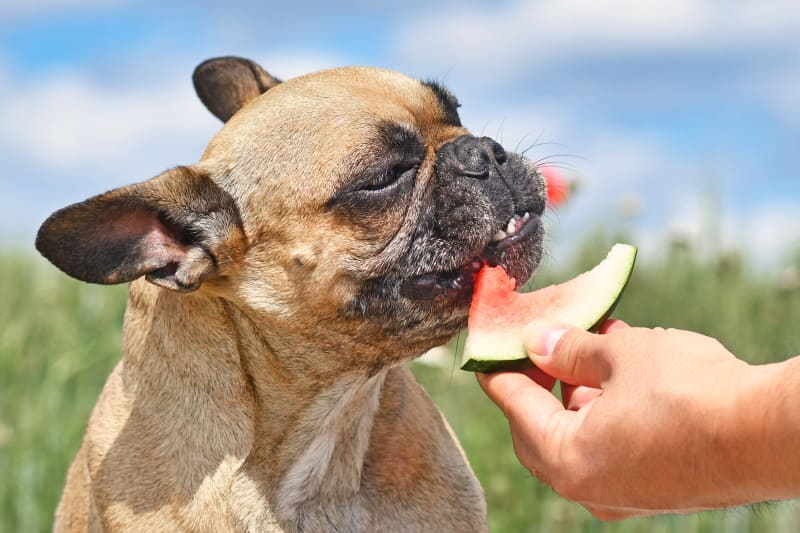
Blueberries, watermelon (seedless, no rind), bananas (peeled), and cantaloupe are all considered safe for dogs in small amounts. Fruits are naturally high in sugar, so they are treats rather than staples. The same goes for strawberries and mango, which dogs tend to enjoy and which carry a decent nutrient profile.

(Source: Chomp & Chew)
On the vegetable side, carrots are one of the most commonly recommended options for dogs. They are low in calories, and many dogs actually enjoy chewing on them. Raw carrots also provide some dental benefit by helping to scrape plaque as the dog chews. Green beans, cooked or raw without seasoning, are another good choice and are often recommended for dogs that need to manage their weight, as they are filling but low in calories and carbohydrates.
Pumpkin deserves special mention. Plain, cooked pumpkin is rich in fiber and works well for dogs experiencing digestive upset, both constipation and diarrhea. It is gentle on the stomach and widely used as a home remedy for gut issues in dogs. Cats can tolerate it too, though their interest in it tends to be lower.
Cooked broccoli and butternut squash are safe for cats in small amounts. Broccoli contains vitamins C and K and some antioxidants. Butternut squash offers vitamin A and fiber. These should be offered as minor additions, not meal components, since cats need their calories to come from animal protein.
Human Snacks and Tidbits

(Source: Nylabone)
Plain, unsalted peanut butter is a longtime favorite for dogs and safe in moderation. It contains vitamins E and B, healthy fats, and protein. However, it is critical that the pet owner makes sure that the label does not list xylitol as an ingredient. Xylitol is a sweetener that is highly toxic to dogs and can cause a rapid drop in blood sugar and liver damage, even in small amounts, so do exercise caution.
Plain, unsweetened yogurt is generally safe for dogs and may offer some benefit through its probiotic content, which can support digestive health. Some dogs are lactose intolerant, so watch for any stomach upset the first time you introduce it. Cats are more commonly lactose intolerant than dogs, making dairy a lower priority for felines.
Plain, cooked white rice is a familiar recommendation from vets when a dog has an upset stomach. It is easy to digest and helps bind loose stools. It carries minimal nutritional value on its own but serves a practical purpose when a dog needs something gentle. Dogs with diabetes should only have small amounts due to the impact on blood sugar.
Universal Rules

(Source: Medvet)
Human food should never make up more than about ten percent of your pet's daily diet. Their main food needs to be a nutritionally complete and balanced pet food that meets their specific needs. Human food, even the healthy options, does not replicate what a formulated diet provides. That is the job of kibble, although being perfectly made for your pets to consume, that does not mean that you aren't able to give your pet a snack once in a while.
If you do opt for a snack, always introduce new foods one at a time and in small portions, as some pets have individual intolerances or allergies that are not universal to their species. Watching how your pet responds before making something a regular treat is simply good practice.
Cut harder foods into small, manageable pieces to prevent choking. Remove all seeds, pits, stems, and skins unless you have confirmed they are safe. And keep seasonings, salt, butter, garlic, and onions entirely out of the equation. Onions and garlic in particular are toxic to both cats and dogs, causing damage to red blood cells, and this applies to cooked forms as well.
If there is ever any uncertainty about a specific food, make a quick call to your vet, for they are an ever reliable source of information.
Sharing food with your pet is one of those small gestures that feels meaningful, and it can be. With the right knowledge, it does not have to come with any risk, and both you and your pets can share the same meal.
References and Helpful Links


Comments